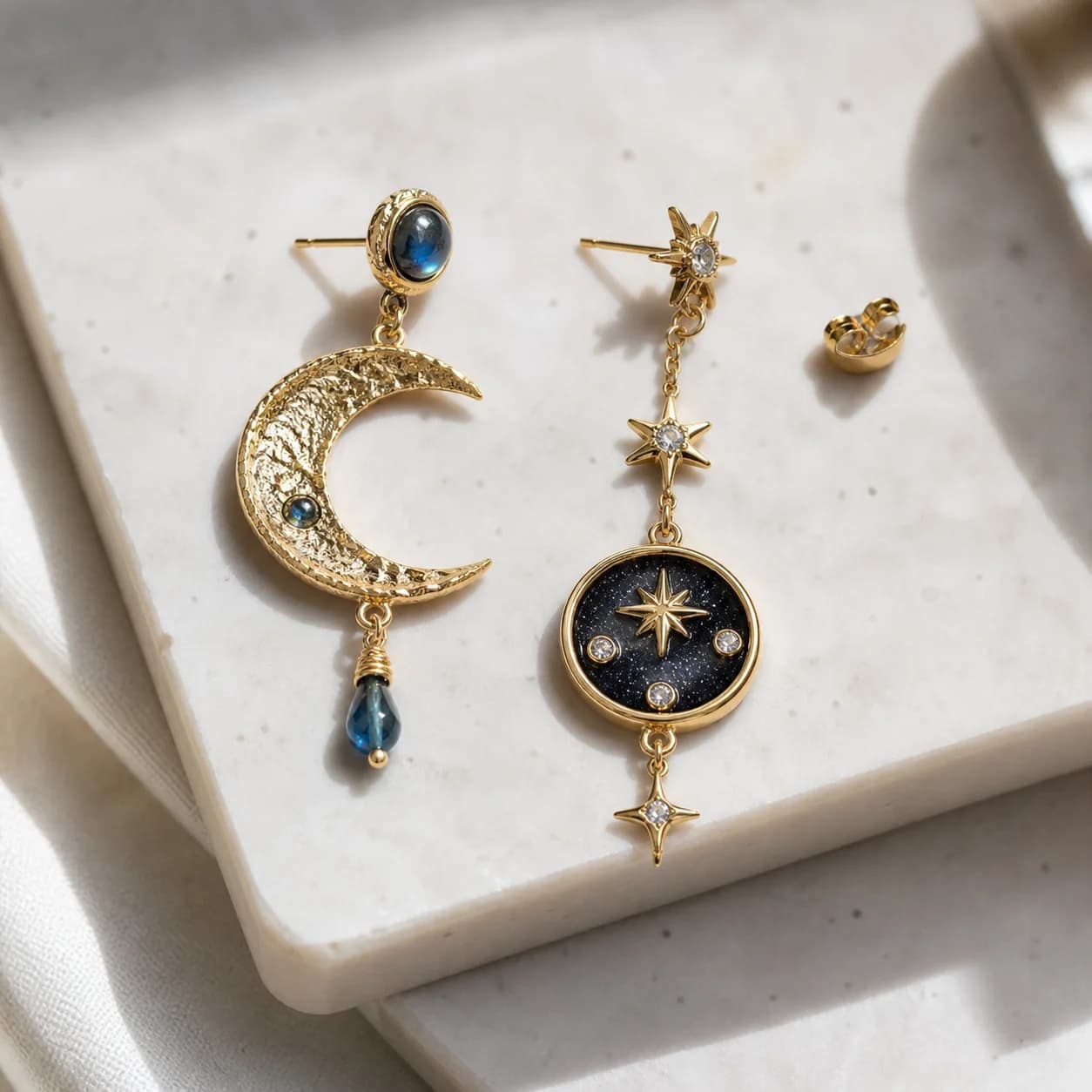
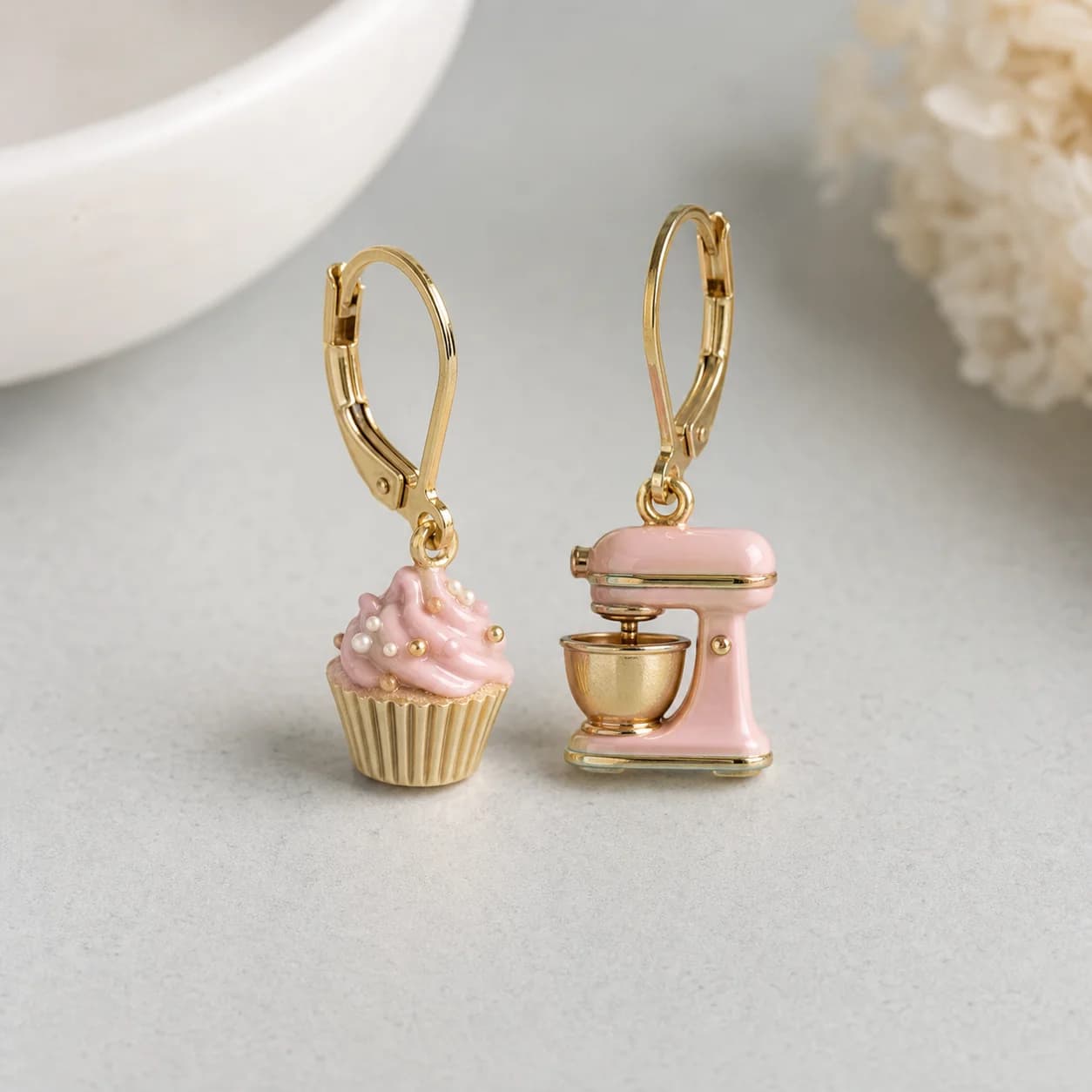
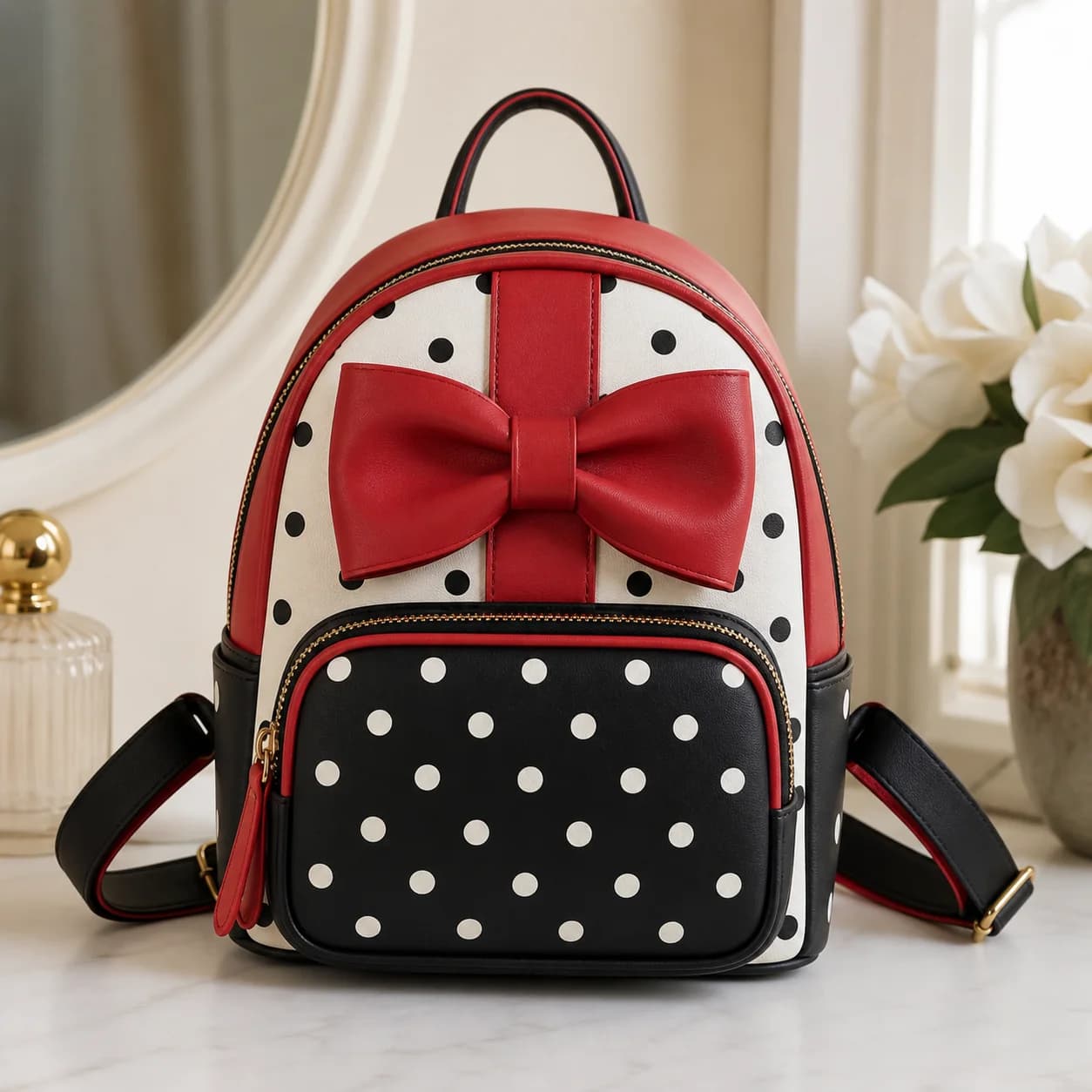
Assign one focal zone
Choose face and neckline, waist, hands, or bag—not all of them. Large earrings usually need a quiet necklace zone. A character backpack already occupies a large visual area and can pair with smaller jewelry.
Repeat one design signal
Echo a color, metal tone, dot, bow, or curve once elsewhere. Repetition makes the accessory feel connected to the outfit; repeating the entire motif across several items usually feels like a theme costume.
Keep the clothing base structurally clear
Solid colors, denim, simple knits, clean jackets, and low-contrast prints leave room for the accessory. The base does not need to be boring—it needs fewer competing messages.
Match scale to distance and dress code
Small novelty studs reward a close look. Larger drops and character bags read across a room. Choose scale based on where the outfit will be seen and how much visual play the setting tolerates.
Use the mirror and a phone photo
A mirror shows movement and comfort; a full-body phone photo shows visual balance. If the accessory disappears, repeat one color. If the outfit feels crowded, remove the nearest competing item first.