Exterior dimensions are an upper outline, not a promise
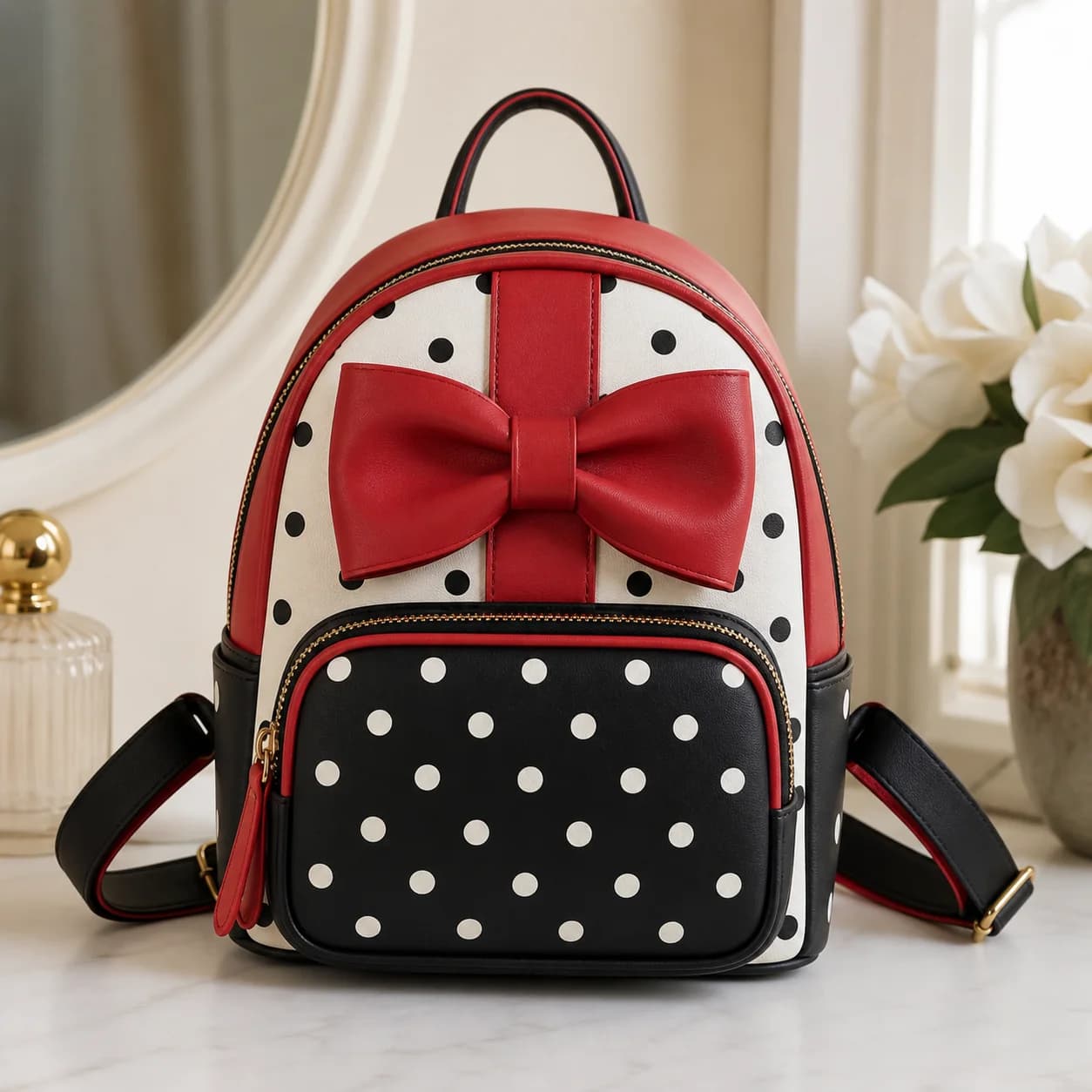
Loungefly lists the Hello Kitty Gingham Mini Backpack, SKU SANBK0463, at 9 × 10.5 × 4.5 inches and notes that width is measured at the bottom. Multiplying those numbers gives an exterior bounding box of about 425 cubic inches, or 7.0 litres. This is our calculation, not the brand's usable capacity claim. Lining, seams, curved panels and compartments occupy space, and the opening can be narrower than the bottom. Do not label that particular bag a tested 7-litre pack.
Measure the case, cap and awkward corners
For a tablet, measure the complete protective case; a diagonal screen-size label is not the item's width or height. For a bottle, include the cap, handle and widest diameter. Record the dimensions of whichever rigid object is least negotiable for your day. Soft items can compress, but a tablet or bottle should not need the bag's zipper to deform around it. Keep the item measurement beside the bag measurements so that you can see which dimension creates the constraint.
Ask for the opening before the internal volume
When the manufacturer or seller lists only exterior dimensions, request the clear opening and usable internal measurements for that exact SKU. Ask whether the measurements exclude internal pockets and decorative projections. A large-looking main compartment does not help if the object cannot pass through the opening. If the answer is unavailable, record the fit as uncertain and compare return terms before buying rather than turning a photograph into a numerical capacity estimate.
Use a mock load without calling it a bag test
Make a paper outline or box based on the documented dimensions and gather the actual items you expect to carry. This is a planning exercise: an exterior box deliberately overstates usable bag space and cannot prove fit. Use it to catch obvious mismatches and identify measurements still missing. Once the actual bag is available, load the items together and close it gently. Check access to the phone and keys without emptying the main compartment, especially if the largest object fills most of the opening.
Check the packed shape and the return decision
Compare strap comfort, access, zipper movement and the exterior shape with the intended outing. A bag that holds one bottle alone may not hold that bottle alongside your other essentials. Avoid bending a rigid device or overfilling a shaped decorative panel to make a marginal fit look successful. Keep labels and packaging as required by the seller while doing permitted fit checks, and use the actual return policy for that purchase. Choose the larger bag when the one indispensable item remains uncertain.